
What are Solar Panels Made of and How Do They Work?
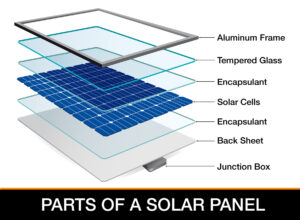
At first glance, a solar panel looks like a simple sheet of glass. But, in reality, it’s a carefully engineered system made up of multiple layers, each one playing an important role in performance, long-term reliability, and durability.1
In the Midwest, where panels face everything from summer heat to snow and ice, that durability matters. Here’s a simple look at what’s inside a solar panel and how it all works together.
Layers of a Solar Panel
 Tempered Glass – Built to Protect
 Tempered Glass – Built to Protect
The top layer is strong, tempered glass that protects the panel from the elements, wind, and debris. It is designed to let in as much sunlight as possible while standing up to tough weather conditions common in states like Iowa, Wisconsin, and Illinois. Tempered glass is known for its strength and temperature resistance, with versions of it used in everything from car windshields to oven doors.
Encapsulant – Holding Everything Together
Just beneath the glass is a thin protective polymer layer that holds everything in place. It also seals the panel from moisture and helps absorb stress from temperature changes, something especially important with Midwest freeze/thaw cycles, and provides electrical insulation for the solar cells.
Solar Cells – Where Energy Is Created
At the heart of every solar panel are the photovoltaic (PV) cells. These are responsible for converting sunlight into electricity.2 Most panels today use high-quality silicon cells that are designed for both efficiency and longevity.
Each cell is made up of two thin layers of silicon (one positively charged and one negatively charged) that work together to create an electric field. When sunlight hits the cell, it knocks electrons loose, and that electric field pushes them into motion, creating an electrical current.3 Small amounts of metals like silver and copper are also present, acting as conductors that capture and carry that current out of the cell.4
While the cells do the work of generating power, they rely heavily on the surrounding layers to keep them protected and operating at peak performance over time.5
Back Layers – Sealed, Protected, and Built to Last
Behind the solar cells are two important layers that work together to protect and stabilize the panel.
The first is another encapsulant layer, which helps hold the cells firmly in place and adds structural support. It completes the protective “sandwich” around the cells, helping guard against movement and stress over time.
The final layer is the back sheet (or in some cases, a second sheet of glass). This outer layer acts as a barrier against moisture, UV exposure, and environmental wear, while also providing electrical insulation.
Together, these back layers play a key role in keeping the panel sealed and protected, helping ensure consistent performance through years of Midwest weather conditions.
 Aluminum Frame – Strength and Support
 Aluminum Frame – Strength and Support
Surrounding the panel is a lightweight but strong aluminum frame.
This frame gives the panel its structural integrity and allows it to be securely mounted to a roof or ground system. It also helps the panel withstand environmental stresses like wind and snow loads while protecting the edges, one of the most vulnerable areas of the panel.
Junction Box – The Connection Point
On the back of the panel, you’ll find the junction box. This component houses the electrical connections that carry the energy generated by the panel into your solar system. It also contains safety features that help ensure consistent performance.
What Happens When a Solar Panel Reaches the End of Its Life?
After 30+ years of generating clean energy, a solar panel doesn’t simply become trash. Glass makes up roughly 75% of a panel’s total weight and is already widely recycled6, along with the aluminum frame and copper wiring. Altogether, most estimates place the recyclable content of a standard solar panel at 85–95%.
The challenge lies in the inner layers, specifically the encapsulant material and trace metals like copper and silver bonded within the cells, which are harder and more costly to separate. Large-scale recycling infrastructure in the U.S. is still catching up, but significant research and investment is underway. The bottom line: solar panels are largely recyclable, and responsible disposal through a certified recycler matters when that time comes.
Solar Panels are Built for the Long Haul
Each layer of a solar panel serves a specific purpose, but it’s the combination of all these components working together that makes modern solar technology so reliable. Today’s high-quality panels are engineered to handle a wide range of environmental conditions — from Midwest heat and humidity to heavy snow loads and freeze/thaw cycles — while continuing to produce clean energy year after year.
While panels may look similar from the outside, the materials and construction inside are what truly define their long-term performance. A solar panel is much more than just glass. It’s a multi-layer system designed for strength, efficiency, and longevity. It’s one of the reasons solar continues to be a smart investment across the Midwest.
With the right equipment in place, homeowners and businesses can feel confident knowing their system is built to perform for decades.7
Sources:
1 U.S. Department of Energy – Solar Photovoltaic Manufacturing Basics https://www.energy.gov/eere/solar/solar-photovoltaic-manufacturing-basics
2 U.S. Department of Energy – How Does Solar Work? https://www.energy.gov/eere/solar/how-does-solar-work
3 How Stuff Works: Science – How Do Solar Panels Work? https://science.howstuffworks.com/environmental/energy/solar-cell.htm
4 Fraunhofer – Out with the silver, in with the copper: A new boost for solar cell production https://www.fraunhofer.de/en/press/research-news/2022/september-2022/out-with-the-silver-in-with-the-copper-a-new-boost-for-solar-cells.html
5 U.S. Department of Energy – Solar Photovoltaic Cell Basics https://www.energy.gov/eere/solar/solar-photovoltaic-cell-basics
6 U.S. Environmental Protection Agency – Solar Panel Recycling https://www.epa.gov/hw/solar-panel-recycling
7 U.S. Department of Energy: Homeowner’s Guide to Solar https://www.energy.gov/eere/solar/homeowners-guide-solar
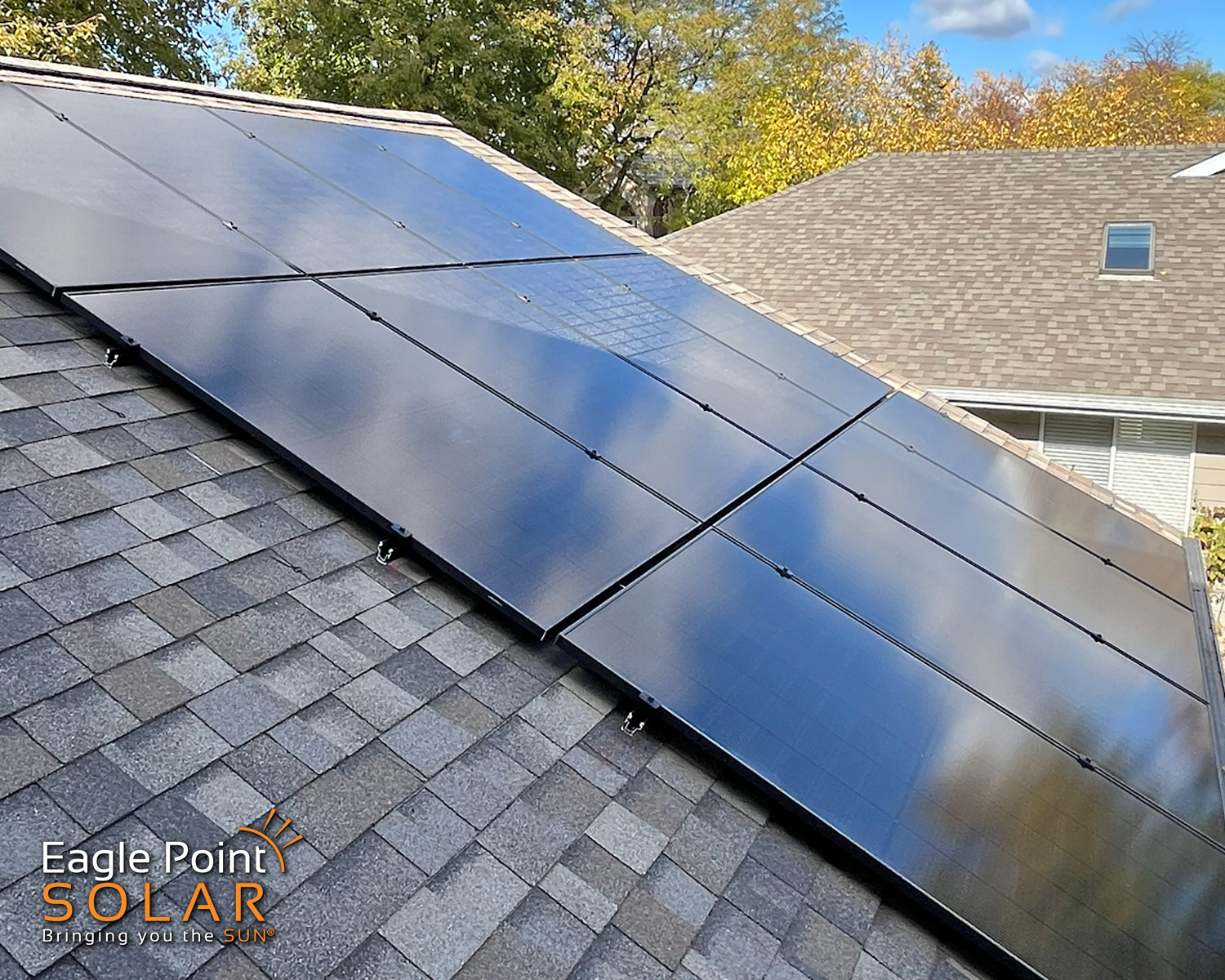
See How Solar Panels Are Made
For a behind-the-scenes look at how these layers come together, check out this short video:
https://interestingengineering.com/videos/solar-panels-made-factory