
Debunking the Top 10 Myths About Solar Energy
Since their invention over 100 years ago, solar panels have become one of the most widely used forms of renewable energy. As solar power continues to increase in popularity, misconceptions still exist, leaving many unsure what is true and what’s not. In this article, we break down the top 10 myths about solar power and provide clear, fact-based answers to help you decide whether solar is right for your home or business.
Myth #1: Solar Panels Only Work on Sunny Days
Fact: Solar panels can use direct or indirect sunlight to generate power.1
On a cloudy, rainy or snowy day, the solar array will still absorb solar radiation. Your array will not produce as much energy as it would on a sunny day with no clouds, but as long as your panels are clear of debris and snow, your array will still be producing some amount of energy.
Myth #2: Solar Power is Too Expensive and Not a Worthwhile Investment.
 Fact: Solar does require an upfront investment, but homeowners already pay for electricity every month, and those costs add up over time.
 Fact: Solar does require an upfront investment, but homeowners already pay for electricity every month, and those costs add up over time.
According to the latest full-year statistics from the U.S. Energy Information Administration (EIA), the average US household spent $1,707.12 on their electric bills in 2024.2 That number was forecast to hit an average of $178 per month in the summer of 2025, with an average usage of 1,032 kWh of electricity and an average residential electricity price of 17.3 cents per kWh.3 That equals over $2,100 per year in electricity costs for the average US household!
With solar, you begin seeing returns as soon as your system is turned on. Many homeowners reach payback in 6 – 10 years (depending on usage, incentives, and system size) and continue benefiting long after.4
Keep in mind that if you choose not to go solar, you will continue paying your utility company indefinitely, often at rising rates.
Myth #3: Solar Panels Require a Lot of Maintenance
Fact: Solar panels require very little maintenance.
Most systems are designed to operate reliably with minimal upkeep.
Even snow typically melts off naturally and can even help clean panels. Learn more here.
To keep your array performing well:
- Trim overhanging branches to reduce shading.
- Periodically check for dirt or debris; a rainy day or simple rinse with a hose is usually sufficient.
- Monitor system performance through your app. Learn more here.
If you ever have concerns, Eagle Point Solar’s Service & Support Team is available to help.
Myth #4: During Power Outages, I Will Always Have Power If I Have Solar Panels
 Fact: This statement can be true or false, depending on your setup.
 Fact: This statement can be true or false, depending on your setup.
If your system has a battery or generator, you will have power during a power outage (assuming your battery is charged or your generator is running).
If you do not have a battery or generator, you will not have power. Since your solar array is tied to the grid, if your utility company loses power, so will you.
The systems are designed to shut down if there is a loss of power on the grid. This is a safety feature to prevent the electricity created by the array from being sent to the grid, which would energize the line and could injure anyone working on the line. If you have battery storage, your array can still send energy to the battery, which in turn, can power your critical loads in an outage.
Read more about the benefits of matching solar with battery storage.
Myth #5: Solar Arrays Do Not Have Warranties
Fact: All solar arrays from Eagle Point Solar have warranties.
From a 5-year warranty on workmanship to a 25- to 30-year warranty on the panels themselves, you can feel safe with your investment. Inverters and battery storage equipment often have a 10-year warranty, with some manufacturers offering extended warranty agreements for an additional cost. You can read more here.
Myth #6: Solar Panels Will Make My Home Harder to Sell
Fact: Just as other home improvements such as new flooring or a kitchen remodel can increase your home’s value, so can a solar array.
A home with solar offers a much lower monthly electric bill for the new homeowners. Potentially saving them several thousand dollars a year in utility costs. With an array, your home’s assessed value will likely increase due to this savings in energy costs. You can read more in our blog: “How To Buy & Sell A Home With Solar.”
Myth #7: My Solar Array Will be Too Small to Make an Environmental Impact
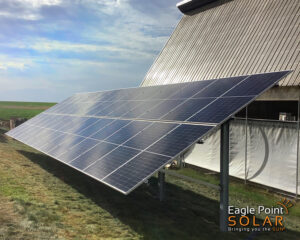
Fact: Solar arrays of any size will have a positive impact on the environment.
Solar panels generate electricity without burning fossil fuels. While manufacturing solar panels does involve some emissions, the overall life cycle emissions are significantly lower than those associated with fossil fuel-based power generation. Studies have shown that solar energy can reduce carbon emissions by 80-90% compared to coal.5 Additionally, the materials used in a solar array can be recycled at the end of the equipment’s life.
Myth #8: Solar Panels Will Not Withstand Bad Weather
Fact: Solar panels are extremely strong and have no moving parts.
Mostly consisting of aluminum and thick glass, they are designed and engineered to last decades in harsh environments. Solar panels are built to withstand:
Myth #9: Solar Panels Don’t Last Very Long
Fact: High-quality solar panels (also known as Tier 1 solar panels) come with 25-30-year production warranties due to the financial strength of the manufacturer and advanced R&D development.
Most panels continue producing power well beyond their warrantied timeframe.9
Myth #10: You Need a South-Facing Roof for Solar Panels
Fact: While south-facing roofs are ideal, east- and west-facing roofs can still produce strong solar output at various points in the day.
The sun rises in the east and sets in the west. Therefore, you can easily gain solar production from sunrise until sunset.10 Eagle Point Solar’s design team accounts for roof orientation, shading, and local production data when building our systems.
The Facts on Solar
Solar power continues to gain momentum as a reliable and proven energy option for homeowners. From long-term savings and durability to environmental benefits, modern solar technology is designed to perform in a wide range of conditions. By understanding the facts behind common solar myths, you can feel confident evaluating whether solar is a smart fit for your home or business and your long-term energy goals.
SOURCES
1 https://seia.org/what-happens-to-solar-panels-when-its-cloudy-or-raining/
2 https://www.eia.gov/electricity/sales_revenue_price/pdf/table_5A.pdf
3 https://www.eia.gov/todayinenergy/detail.php?id=65544
4 https://www.thisoldhouse.com/solar-alternative-energy/solar-panel-payback-period
5 https://iere.org/how-can-solar-power-help-the-environment
6 https://www.insurancejournal.com/news/southcentral/2025/05/27/825200.htm
7 https://www.congress.gov/118/chrg/CHRG-118hhrg56911/CHRG-118hhrg56911.pdf
DOCUMENT PAGE # 47, page 61 in the pdf thumbnails.
8 https://greencoast.org/solar-panels-and-weather/
9 https://www.okonrecycling.com/renewables-recycling/solar-panel-recycling/solar-panels-after-25-years
10 https://www.energysage.com/solar/solar-panel-performance-orientation-angle
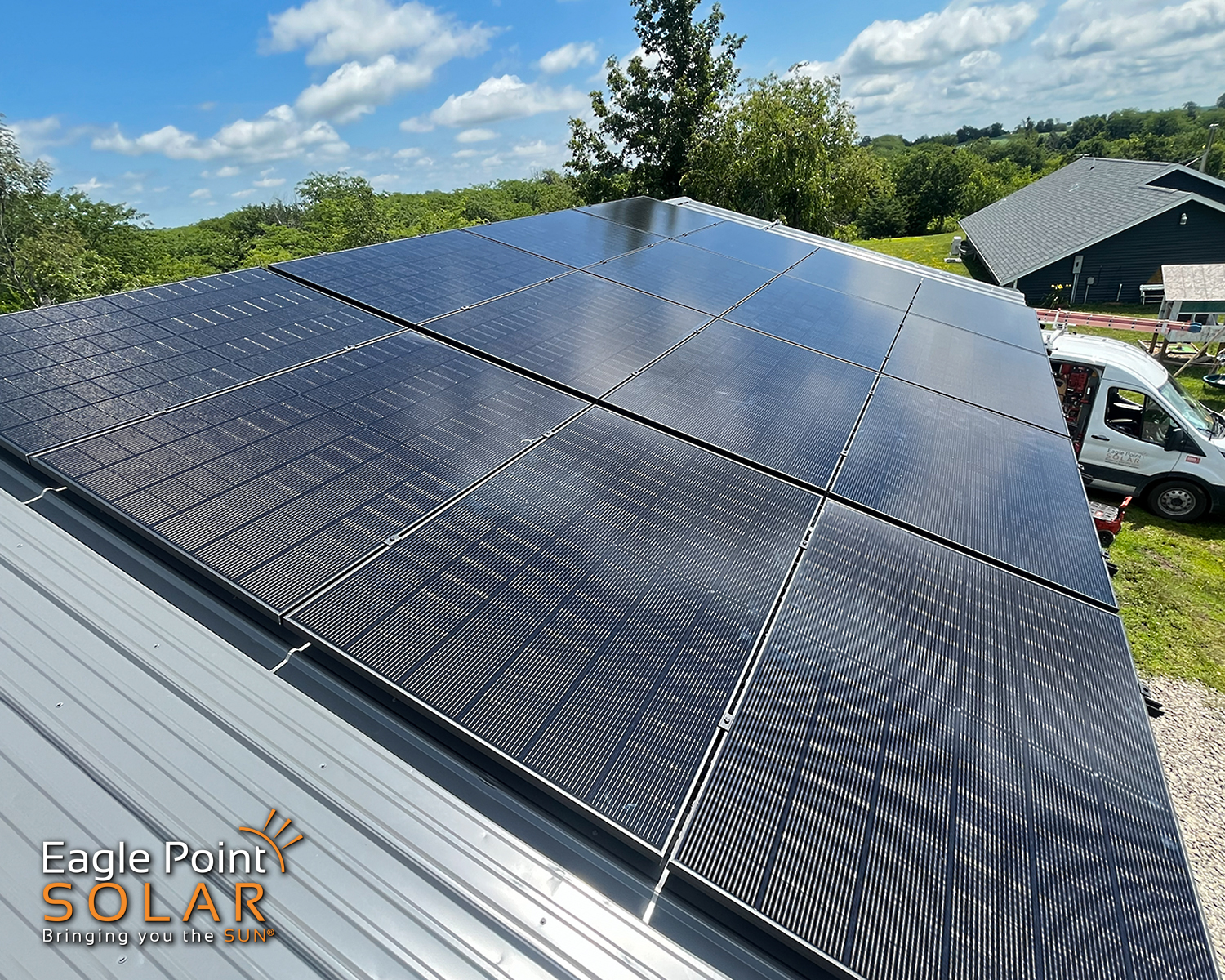
Find Out the Facts About Solar
Want to know more facts about solar specific to your home, farm or business? Sign up for our free solar analysis. It can give you everything from a recommended grid size and location to projected costs and energy savings.