
Does Summer Heat Affect My Solar Array Production?
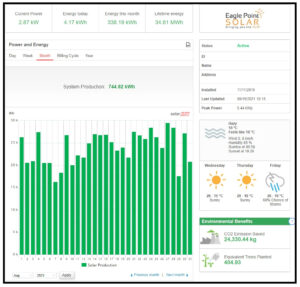
Sunlight and heat often go hand-in-hand. Throughout the year, as we increase our sunlight exposure, the outdoor temperatures typically will increase as well. The more sunlight penetrating the solar panels, the more energy solar panels will produce. However, an increase in temperature does not equate to better solar array production. Solar panels actually produce better in cooler temperatures. So, a sunny, hot day may not produce as much energy as a sunny, cool day.
The global climate and local weather patterns in your area are always changing and solar is designed to work in various conditions all over the world. This means most systems do not operate under ideal conditions all the time. While on clear, sunny days, your system will be cranking out a lot of clean, renewable electricity you may see the system perform better during clear, sunny days when the temperature is 10-20˚ degrees cooler.
Solar panels are made to withstand extreme temperatures, it is unlikely the outdoor temperature will get warm enough to greatly effect the functionality of a quality solar panel. Solar energy systems perform at their maximum efficiency in a moderate temperature of around 77˚ degrees Fahrenheit. Peak performance of solar panels typically fall between 59-95˚ degrees Fahrenheit.
How solar works in different temperatures
 Solar panels utilize the sun’s light in the form of photons. Photons hit the solar panels dislodging electrons in the panel’s atoms. The electrons move through the panel’s circuits and this rapid movement produces an electric current.
Solar arrays work more efficiently on cold days as the resistance to the flow of electricity becomes less. On a cool day, it takes more energy to dislodge the electrons creating more electric current (solar power). While on a hot day, the electrons are already slightly energized from the heat. The panel has to do less work for the same movement resulting in less solar output. This explains why panels which receive the same amount of sunlight produce different amounts of energy on a 70˚ degree day vs. a 100˚ degree day.
How to reduce the effects of heat on solar production
Changes in installation practices can help reduce the effects of heat in solar production. Installation of solar panels with ample space underneath will allow for airflow to naturally keep the panels cool. In extreme heat locations selecting a string inverter rather than micro inverters can also reduce heat exposure by mounting the string inverter in a shaded area.
Selecting the right solar installer can also make a big difference in the production of your array. The same system you would engineer and install in the midwest would not be the same system you would build in Arizona. This is a great example of when shopping locally can get you the best return on your investment. Often, local solar companies will use regional weather data and have a better understanding of the climate and local weather patterns versus a company several states away using a more generalized approach to weather and local climate information.
Conclusion
The outdoor temperature should not be a performance concern when it comes to your solar array production. Any loss in production from less-than-ideal conditions can be minimized by choosing high-quality panels and equipment designed for the highest efficiency and performance in your climate. Your array will always fluctuate in production levels as the weather patterns change and sun exposure and temperatures increase or decrease throughout the year. Solar panels are built to withstand everything from rain to severe weather and even hot and cold temperatures.
Want to learn more about Tier-1 solar panels? If you are ready to find the right solar energy solution for you, Eagle Point Solar is here to help you design and install a turnkey solar energy solution to help you get the most return on your investment, year-round.
Curious about lowering your energy costs and switching to solar? Request a FREE Solar Analysis or talk to an Eagle Point Solar team member today.