
How Do I Know if My Solar Array is Working?
Your solar array is designed and engineered to work silently behind the scenes producing renewable energy from the power of the sun, for decades. Solar panels (also known as solar modules) contain no moving parts, thus requiring little maintenance. Therefore, it can become difficult to visually tell by looking at your panels if they are working correctly. So how do you know if your solar array is working? Below are some suggestions to help provide you with an answer.
Check the Inverter or Communications Unit

The inverter is a vital component of your solar array and often described as the brains of your energy system. The inverter’s job is to invert direct current (DC) electricity from the solar modules into alternating current (AC), which is what your home or business runs on. There are two types of inverters: string inverters and micro inverters. If your system contains a string inverter, this is the first place you want to examine to determine how your system is functioning. String inverters are typically mounted by the meter or the array. To ensure proper working order, check the inverter for green colored lights or production numbers displayed on a digital screen (if present). If you see orange or red lights or zero production displayed, and it is a sunny day, your array is not functioning properly. Inverter manufacturers may display these notifications differently across models. SolarEdge string inverter colors or display messaging may not be identical to Fronius inverters etc. Refer to your inverter manufacturer manual or their website for specific details regarding production notifications.
If your solar array contains micro inverters, these are smaller units mounted directly under the solar modules and directly report their operating status to a communications unit. The job of the communications unit is to report the production status of the array to your monitoring portal. A solar array with a string inverter may or may not have a separate communications unit. If one is present for your system, this unit would be another place you want to examine for any irregularities such as a red light or a communications error message displayed.
If you are still unsure if your solar energy system is functioning correctly, reach out to Eagle Point Solar’s dedicated service and support department for additional help.
Monitor Production
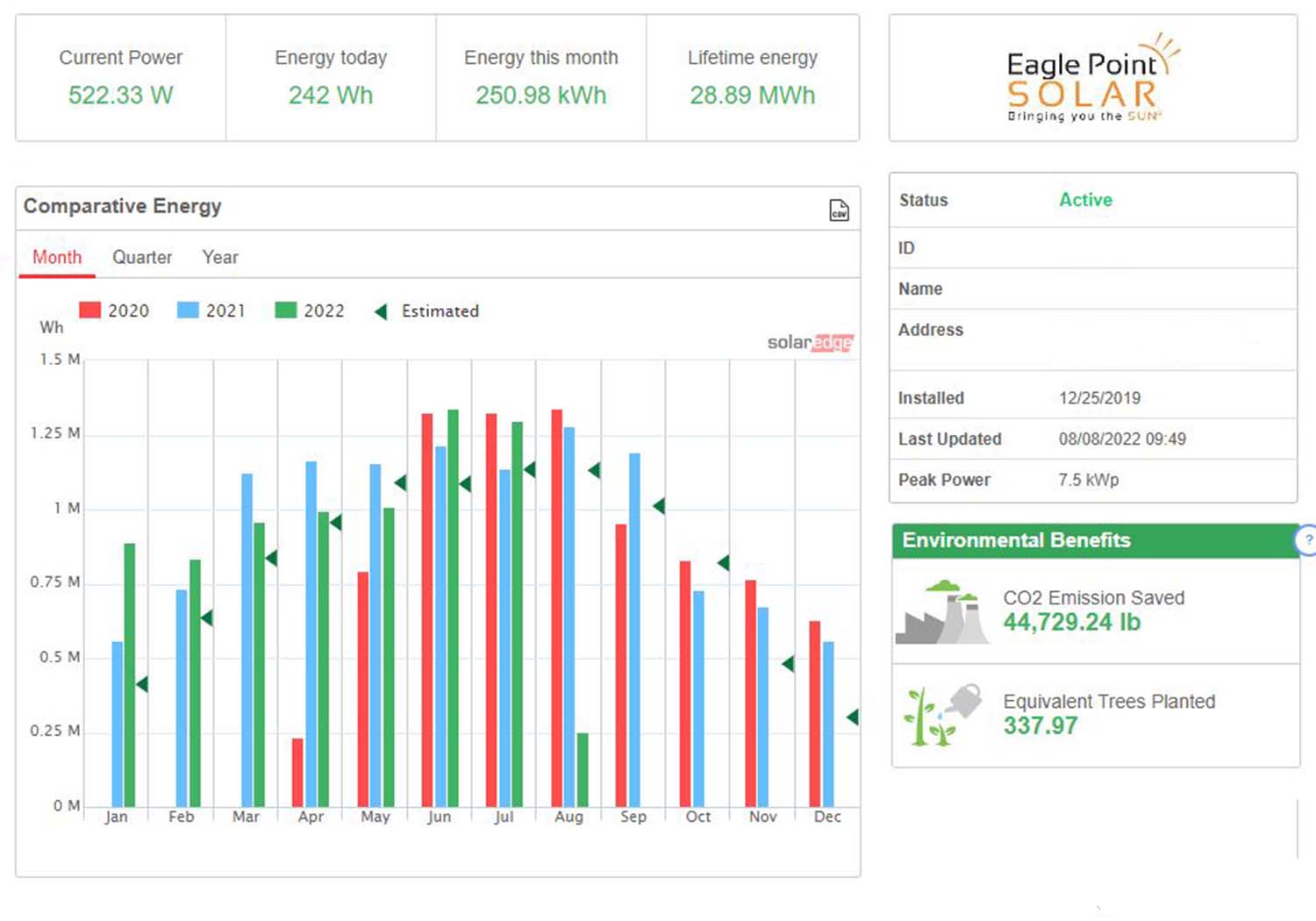
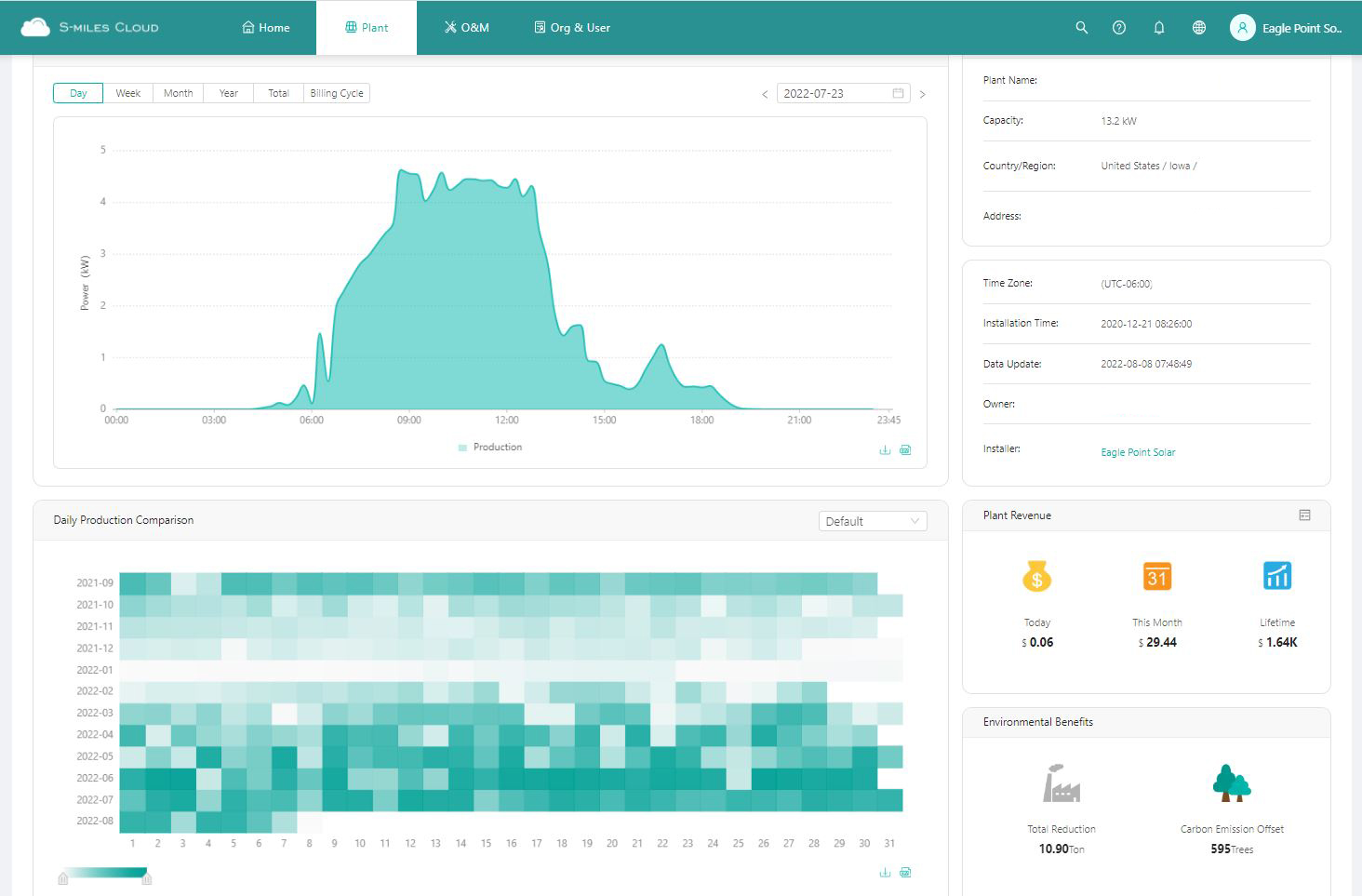
Another way to check if your solar array is producing energy is to examine the data transmitted to your online monitoring portal. Log into your portal and review the historic production data for any major changes in energy production levels. You can also compare your production data with the quoted production figures from your solar provider. This can help remove the guess work associated with how much energy production is normal for a given month.
NOTE: Many solar array monitoring platforms have the ability to send alerts or notifications to a user. These can be alerts or notifications regarding changes in the systems status or daily production totals.
Pay Attention To Your Electric Bills
A red flag your system may or may not be working properly is by reviewing your monthly electric bill. If your solar energy system is working correctly, your electric bill will be lower. Remember, electric bills will fluctuate due to the amount of daylight available for that time of year, changes in your electric usage during that billing period and weather cycles, to name a few. If your monthly electric bill is similar to your pre-solar bill, it’s time to contact Eagle Point Solar Service and Support for a more detailed review of production or onsite inspection of your array.
Check the Weather
Weather is a key factor in how much solar energy production you receive from your array. While solar will produce energy on cloudy, rainy, or snowy days, the total energy produced during these periods will be minimal, versus a sunny day. Rain, snow or debris like leaves, branches and rural gravel dust will directly affect the energy potential for the array. If your solar production remains low, visually inspect the array for anything blocking the sun from penetrating one-hundred percent of your panels.
What To Do If Your Solar Array is Not Working?
- Check the breaker(s). Similar to other electronics, sometimes all we need to do is turn a device off and back on again to force a reset and help resolve a software or connecting problem.
- Restart the inverter. This can help to clear any faults which are causing it not to perform. Contact your installer if you need assistance doing this step.
- Clear debris. Check if there is something covering the array. If you have built up leaves or branches, removing them can be enough to make a difference. Check if any trees have grown and could be trimmed back for increased production. Look for debris under the panels as well. Nesting animals can loosen and/or damage your systems components leading to lower energy production.
- Contact your solar company. If you are concerned your array is not producing as expected, contact Eagle Point Solar for assistance. Our dedicated staff of service and support solar professionals are here and ready to help. Our teams can analyze your system remotely for faults and complete any necessary software upgrades. Eagle Point Solar service technicians can also perform comprehensive onsite inspections and repairs when remote troubleshooting steps have been exhausted.
In summary, you deserve your solar energy system to be preforming optimally and providing you with worry-free sustainable, renewable solar energy for decades to come. However, much like other advanced technology systems, problems can occur. Reviewing your monthly solar production, setting alerts and notifications and periodically conducting a visual inspection of your array can help you pinpoint any irregularities in a timely manner.

Need assistance to ensure your solar array is working and continues to perform at optimal levels? Eagle Point Solar offers ongoing and annual maintenance and support agreements including; firmware updates, remote performance diagnostic testing, site inspection, preventative maintenance, vegetation removal, spot cleaning, warranty repair, array removal or expansion and more.