
Astronauts Install New Roll Out Solar Array on International Space Station
After 20 years of soaking up the sun’s rays with eight solar panels, the International Space Station is now in the process of an upgrade. As of Sunday, astronauts Shane Kimbrough and Thomas Pesquet have successfully installed a new ISS Roll Out Solar Array, or iROSA. This is the first of six new iROSAs that will be installed.
Work on the roll out solar array started on Wednesday, but was interrupted due to complications with Kimbrough’s suit. After returning to the space station’s airlock, rebooting the spacesuit’s display system, and stablizing the suit’s pressure, the two astronauts were able to return to work, but had lost a significant amount of time. They finished the installation on Sunday to the point where they could successfully unfurl the 60-foot iROSA. The unfurling process took approximately six minutes.
The Future of Roll Out Solar Arrays
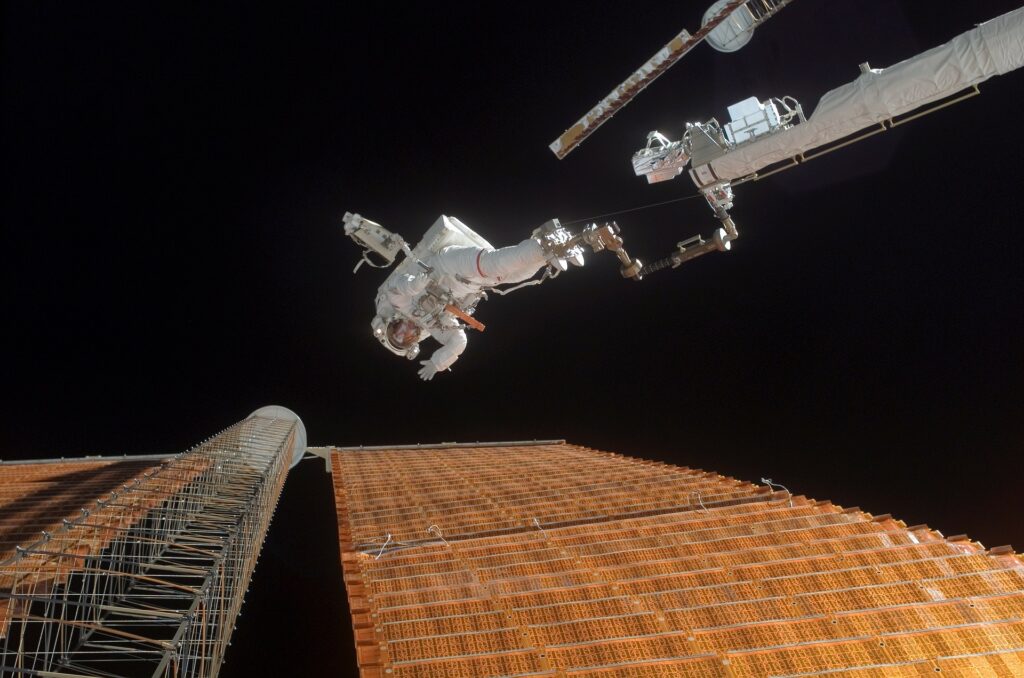 Now that the first solar array is in place, plans can continue to install the next five pieces. The second panel may go up as early as this week. The new arrays will sit on top of the existing ones, and even though they are about half the size of the old panels, the new ones will be able to generate about the same amount of electricity as each of the existing panels.
Once all of the new arrays are in place, the space station’s total power will increase from 160 kilowatts to 215 kilowatts. This additional power will allow for NASA’s continuing research and technological displays, as well as paying passengers to visit the station. For example, a Russian film crew has plans for a launch to the ISS this October. The new iROSAs have an expected lifespan of about 15 years, however it is likely that they will last longer.
The launch of these new solar arrays are also a good test for the roll-out design as it will be used for future programs. This design will be powering Gateway, a multi-purpose outpost that will support NASA’s Artemis program. Artemis will be the twin sister of Apollo, bringing the first woman and first person of color to the moon.
Benefits of Solar Energy
As solar energy makes technological advances 250 miles into space, it’s important to consider what it can do down here on earth. Advances in solar photovoltaic (PV) technology have made solar a more viable option for most homes or businesses. Saving money, reducing your carbon footprint, and increasing property value are just a few benefits of solar energy to consider. Eagle Point Solar has the team and the technology to design, engineer and build a turnkey solar energy system to meet your energy consumption needs. Contact us to learn more about solar and obtain your Free Solar Analysis!
To stay up to date and view photos and videos on the iROSAs on the International Space Station, follow NASA’s Space Station Blog.
Start your own solar journey with our Free Solar Analysis to learn more about the value of solar.